“My son can count to ten in Mandarin, but I don’t speak it, so I can’t tell if he’s saying the numbers right.” We hear some version of this from Filipino parents almost every week, and it makes sense. Mandarin numbers look simple on paper, yet each one has a tone, and a small slip can turn one number into another.
The good news is that counting from one to ten is one of the easiest places to start, even if you have never studied Chinese. Below you’ll find all ten numbers with their characters and pinyin, recordings you can play right on this page, pronunciation tips written for Filipino kids, and simple games you can play at home.
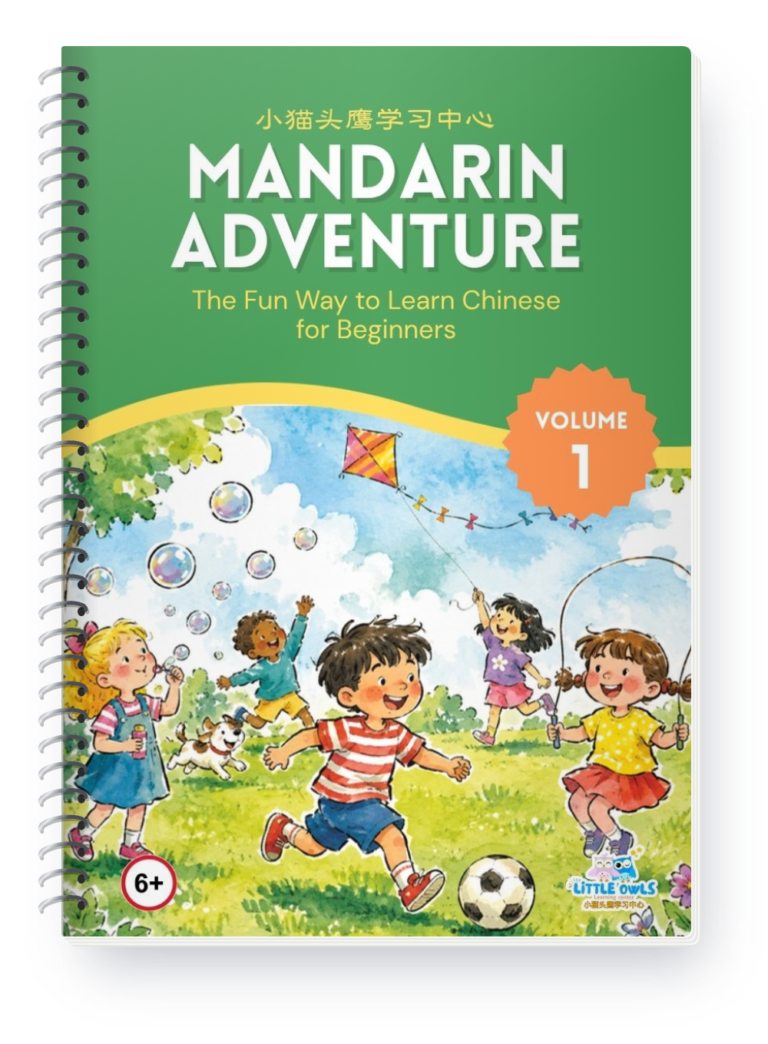
Counting to ten is Lesson 1 in our curriculum. Get Lesson 1 of our Mandarin Adventure workbook free, with pinyin and English on every page so you can practice together at home. Get the free lesson ↓
Want video lessons and games too? See Mandarin Adventure at Home
Chinese numbers 1 to 10, with audio
Every number from one to ten is a single syllable and a single character. That makes them easier to learn than most beginner words, and it is why counting is the first thing our students learn in Lesson 1 of our curriculum. Tap any card below to hear how it sounds, then try the listening game to check whether your child can recognize each number by ear.
Tap a number to hear it
These are the same recordings we use in our Mandarin Adventure lessons.
Listening game
Press play, listen, then tap the number you heard.
Use this table as a quick reference while you practice. The "sounds like" column gives you an approximate English sound so you can follow along, but the recordings above are the best guide, because English spelling can only get you close to the real Mandarin sound.
| Number | Character | Pinyin | Sounds like |
|---|---|---|---|
| 1 | 一 | yī | "ee," said high and steady |
| 2 | 二 | èr | "ar," with the tongue curled back, falling |
| 3 | 三 | sān | "sahn," high and steady |
| 4 | 四 | sì | "suh," short and falling (not "see") |
| 5 | 五 | wǔ | "woo," dipping down then up |
| 6 | 六 | liù | "lyo," falling |
| 7 | 七 | qī | "chee," high and steady |
| 8 | 八 | bā | "bah," high and steady |
| 9 | 九 | jiǔ | "jyo," dipping down then up |
| 10 | 十 | shí | "shur," rising like a question |
Prefer to watch and repeat? Our short video below shows each number with its character and pinyin, says it out loud, and then gives your child a turn to say it back before counting all ten together.
Pronunciation tips for Filipino kids
Mandarin uses tones to change meaning, which is new for most Filipino children. In Filipino and English, your voice rises and falls to show feeling, but the word stays the same. In Mandarin, the pitch is part of the word itself, so the same syllable said with a different tone can mean something completely different. The marks over the pinyin, like the line in yī or the rising mark in shí, tell you which tone to use.
Watch out for 四 (sì, four) and 十 (shí, ten). These two are the numbers kids mix up most. Four is a short, sharp "suh" that drops quickly, while ten has a curled "sh" sound and rises like a question. Saying them one after the other, slowly, is a great way to practice the difference.
七 (qī, seven) is spelled with a q but sounds like "chee." Pinyin uses some letters differently from English, so a child who reads pinyin like an English word will often say seven wrong. The same goes for 九 (jiǔ, nine), which sounds closer to "jyo" than "joo."
Two has two forms, and your child will meet both. When counting "one, two, three," we say 二 (èr). When talking about two of something, such as two apples or two friends, Mandarin usually uses 两 (liǎng) instead. If your child's teacher says liǎng, they are not making a mistake.
Counting past 10 follows a simple pattern
Once your child knows one to ten, they already know the building blocks for every number up to 99. Eleven is "ten one" (十一, shíyī), twelve is "ten two" (十二, shí'èr), and so on up to nineteen. Twenty is "two ten" (二十, èrshí), and twenty-five is "two ten five" (二十五, èrshíwǔ).
- 十一 (shíyī) = 11, which is 10 + 1
- 二十 (èrshí) = 20, which is 2 × 10
- 三十五 (sānshíwǔ) = 35, which is 3 × 10 + 5
- 九十九 (jiǔshíjiǔ) = 99, which is 9 × 10 + 9
- 一百 (yìbǎi) = 100
This logical pattern is one reason children often find Mandarin counting easier than English. There are no special words like "eleven," "twelve" or "twenty" to memorize. When you are ready for bigger numbers, our guide to counting Chinese numbers with the finger method walks through hundreds, thousands and beyond.
Lucky and unlucky numbers in Chinese culture
Some numbers carry special meaning because of what they sound like. Kids love these stories, and they make the numbers easier to remember, especially around Chinese New Year, which falls on February 6 in 2027.
八 (bā, eight) is the luckiest number of all. It sounds similar to the word for getting rich or prospering, so it shows up everywhere from phone numbers to prices. The Beijing Olympics even opened at 8:08 p.m. on August 8, 2008. In the Philippines, many Filipino-Chinese families prefer even amounts with plenty of eights when they give ang pao.
四 (sì, four) is often seen as unlucky. It sounds close to the word for death, which is why some buildings skip the fourth floor. Many families treat this as a light superstition rather than a strict rule, so it is a fun fact to share with kids rather than something to worry about.
六 (liù, six) and 九 (jiǔ, nine) are considered lucky too. Six is linked with things going smoothly, and nine sounds like the word for "long-lasting," which is why it often appears in wedding and birthday wishes.
Easy ways to practice counting at home
Short, everyday practice works better than long study sessions. A few minutes a day, built into things you already do, is usually enough for young children to remember all ten numbers within a couple of weeks. Here are some ideas our parents use:
- Count the stairs together in Mandarin every time you go up or down.
- Count pandesal or fruit at breakfast, and let your child hand you "三个" (sān gè, three) of something.
- Play taguan (hide-and-seek) and have the seeker count to ten in Mandarin.
- Use sungka shells, beads or blocks for a counting game where your child picks up the number you call out.
- Show the numbers on your hands. Chinese speakers use one-hand signs for six to ten, and kids find them fun to copy.
Our finger method video shows the hand signs step by step. It is a quick, playful way for younger kids to connect each number with a gesture, which helps them remember the sounds too.
Match the goal to your child's age. For ages 3 to 5, aim for counting out loud to ten with the hand signs. Children around 6 to 8 can start recognizing the characters and writing simple ones like 一, 二 and 三. Older kids can learn to count all the way to 100 using the pattern above. Our list of basic Chinese words for beginners and our guide to helping with Mandarin homework when you don't speak Chinese are good next steps.
Keep going with Lesson 1
Counting to ten is exactly where our Mandarin Adventure workbook begins. Lesson 1 teaches the numbers alongside words for age and birthdays, so your child can say "我七岁" (wǒ qī suì, I am seven years old) by the end of it. The lesson has pinyin and English on every page, so you can help even if you are just learning yourself, and you can add the online course for videos, flashcards and games that go with each page.
Get Lesson 1 free below, and we'll email it to you right away.
Get Lesson 1 Free
Try the first lesson with your child at home. We’ll email you the PDF right away.
Ready to go beyond ten?
Book a trial class and a teacher will meet your child online: 45 to 60 minutes in a small group of up to four children, with no obligation to enroll. Prefer to learn at home first? Mandarin Club is our self-study course built on the same curriculum. Questions? Message us on WhatsApp or Messenger, or email info@littleowlsph.com. We reply Tuesday to Saturday, 10am to 6pm.