“We’re not Chinese. Is it really worth it for our child to learn Mandarin?” It’s one of the questions Filipino parents ask us most, and it’s a fair one. Your child already juggles Filipino and English, maybe a regional language too, plus a full school load.
The short answer: yes, if your child is curious and you can commit to steady practice. You don’t need Chinese heritage, and you don’t need to speak a word of Mandarin yourself. Many of the families we teach have no Chinese background at all. Here’s why parents choose it, the worries that come up most, and an easy way to find out if it suits your child.
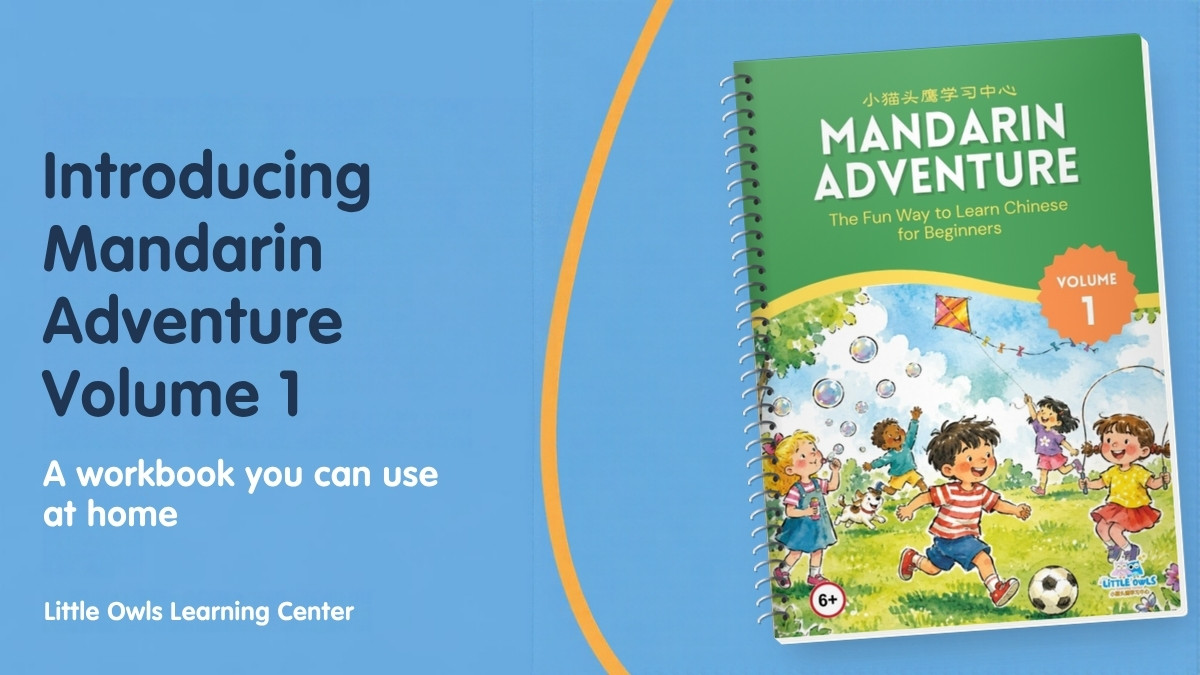
Want to see if your child takes to it? Lesson 1 of our Mandarin Adventure workbook is free. It has pinyin and English on every page, so you can help even if you don’t speak Mandarin. Get the free lesson ↓
Prefer a live class? Book a ₱599 trial class
Why a Filipino child should learn Mandarin, even without Chinese roots
It’s the language of our biggest trading partner. China is the Philippines’ largest trading partner, with $47.75 billion in two-way trade in 2025, about two and a half times the trade with second-place Japan. That means jobs in trade, logistics, tourism and business where Mandarin is a real advantage.
Our schools already treat it as a useful foreign language. DepEd teaches Mandarin in public high schools through its Special Program in Foreign Language, alongside Spanish, Japanese, French and German, for students in Grades 7 to 12. Starting earlier means your child walks into those years with a head start.
Filipino kids are already built for this. Most of our children grow up switching between Filipino and English, and often a regional language too. For a Filipino child, learning Mandarin builds on the switching they already do every day.
It makes your child stand out. A child with no Chinese background who can read, write and hold a simple conversation in Mandarin has a skill few classmates share. That shows up later in school applications, interviews and travel.
It trains careful listening and focus. Mandarin uses tones, so the same sound can mean different things depending on its pitch. Kids learn to listen closely. Writing characters stroke by stroke also builds patience and attention to detail.
What parents worry about, and what we tell them
“Nobody at home speaks Mandarin. How can I help?” You don’t need to. Good beginner material gives every word in pinyin (Mandarin written in the alphabet we already use) with an English meaning, so you can follow along. Your job is to sit with your child for 15 to 20 minutes and keep it a habit. Pronunciation and tones are where a teacher helps most.
To get started, here are two short videos from our YouTube channel that help a Filipino child learn Mandarin phrases at home. Watch them together and say the words out loud.
“Isn’t Mandarin too hard?” Some parts are easier than people expect. Verbs don’t change for past, present or future, and nouns have no plural endings. The challenges are the tones and the characters, and both come with time when children start with sounds and pinyin, then add characters a few at a time.
“Won’t a third language confuse my child?” Research from Oxford Brookes University’s BabyLab on young bilingual children finds no evidence that learning more than one language causes confusion or delay. Mixing words from two languages in one sentence is normal, and Filipino families see it every day with Taglish.
“Is my child too young, or too old?” We teach children from age 3 to 15. Younger kids pick up sounds and tones easily through songs and play. Older kids move faster through reading and writing because they can follow structure.
“Will they just forget it?” Only if practice stops. A few minutes a day beats one long session a week, which is why we pair classes with simple practice at home.
Want to try it before you decide? Download Lesson 1 for free and do it together with your child this week.
How to tell if your Filipino child is ready to learn Mandarin
The clearest sign is how your child reacts to a first taste of the language. A child who is ready usually gets curious: they repeat a new word at dinner, ask what something is called in Mandarin, or want to do the next page. It also helps if they can stay with a short activity for about 15 minutes, since that is how most home practice works.
Here are two easy ways to give your child that first taste and see how they respond:
- Try a free lesson at home. Download Lesson 1 of our Mandarin Adventure workbook, “你几岁? How Old Are You?” It has a short story, nine new words, the numbers one to ten and a writing page, with pinyin and English throughout. A QR code shows how to write each character. Get it free below
- Book a trial class. If your child enjoys the lesson, a teacher can take it from there. Our trial class is 45 to 60 minutes online for ₱599, in a small group of up to four children. Book a trial class
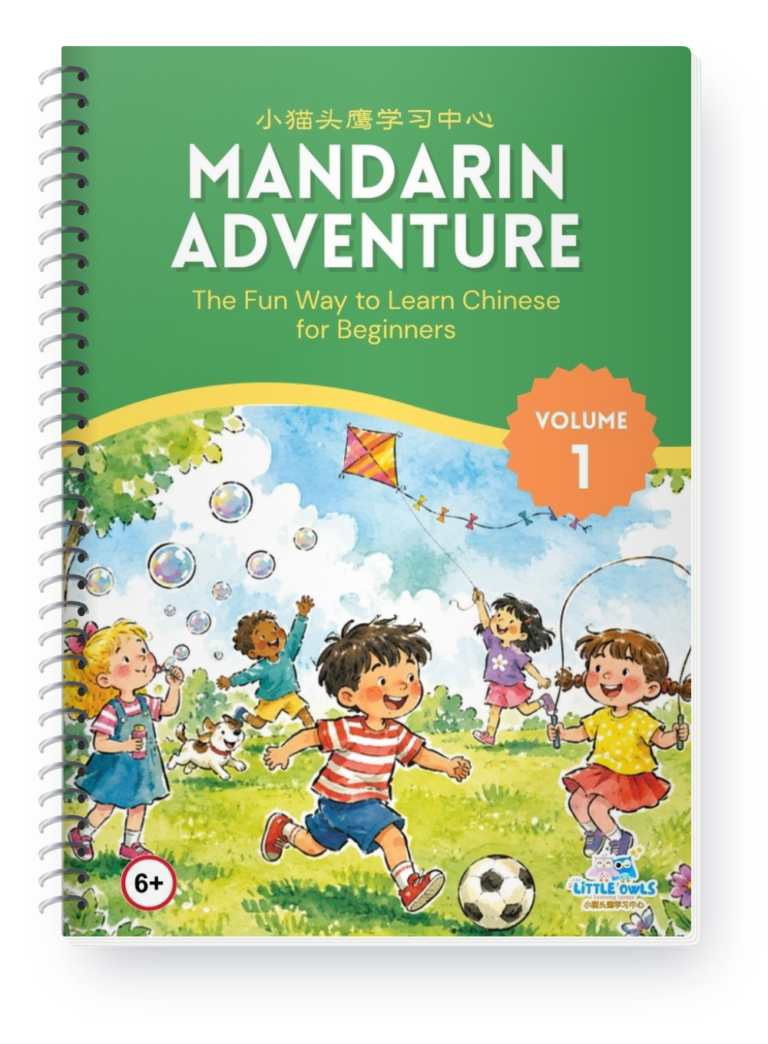
Get Lesson 1 Free
Try the first lesson with your child at home. We’ll email you the PDF right away.
Ready for a live class?
Book a trial class and a teacher will meet your child online: 45 to 60 minutes for ₱599, in a small group of up to four children. Questions first? Message us on WhatsApp or Messenger, or email info@littleowlsph.com. We reply Tuesday to Saturday, 10am to 6pm.