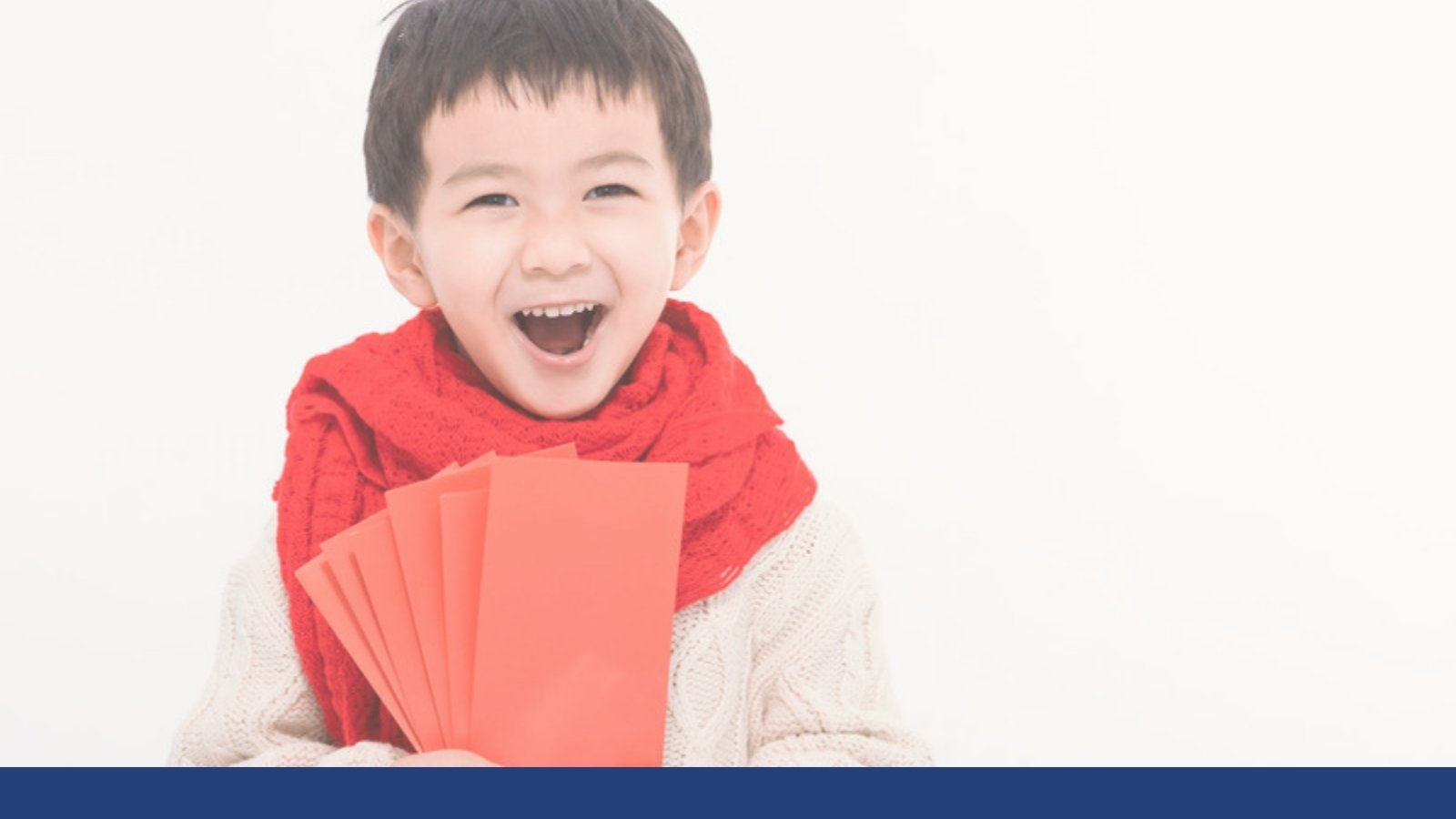
Every Chinese New Year, Filipino-Chinese children line up to greet their grandparents, titos and titas, and every greeting ends the same happy way: with a red envelope pressed into both hands. That envelope is the ang pao, and the customs around it are some of the first pieces of Chinese culture many kids learn.
This guide explains what ang pao means, where the tradition comes from, who gives and who receives, how much to put inside and the do’s and don’ts families follow. You will also find the greetings children say when they receive an ang pao, with audio so your child can practice before the family visits begin.
An ang pao is a red envelope with money inside, given as a wish for good luck. “Ang pao” is the Hokkien name for 红包 (hóngbāo), which means “red packet.” Married adults and elders give ang pao to children and unmarried relatives, mostly during Chinese New Year, though families also give them at birthdays, weddings and graduations.
Use crisp new bills, avoid amounts with the number 4, give and receive with both hands, and wait until the giver has left before opening it. Children usually say 恭喜发财 (gōng xǐ fā cái) or 新年快乐 (xīn nián kuài lè) and then 谢谢 (xiè xie) to say thank you.
Watch: Ang Pao in Two Minutes
This short video walks through the meaning, the rules and the greetings, with Mandarin audio your child can repeat.
What Ang Pao Means
“Ang pao” comes from Hokkien, the Chinese language spoken by most Filipino-Chinese families. Ang means red and pao means packet or envelope. In Mandarin the same word is written 红包 and pronounced hóngbāo. You may also see it spelled ampao, ang pow or angpao, and in Hong Kong and among Cantonese speakers it is called lai see.
The red color is what gives the envelope its meaning. In Chinese culture red stands for luck, happiness and protection, which is why it shows up on lanterns, couplets and New Year clothes. Many envelopes are printed in gold with characters such as 福 (fú, good fortune) or a picture of the year’s zodiac animal. For Chinese New Year 2027, that animal is the goat.
Families often say the meaning sits in the envelope and the wish behind it more than in the amount inside. A small ang pao from a grandparent still carries the full blessing.
Where the Red Envelope Tradition Comes From
A favorite legend tells of a demon called Sui (祟) that crept into homes on New Year’s Eve and frightened sleeping children. One family kept their child awake playing with eight coins wrapped in red paper. When the child finally fell asleep, the coins rested by the pillow, and when Sui reached out, the red paper flashed with light and scared it away.
That story gave New Year money its Mandarin name, 压岁钱 (yāsuìqián), often explained as “money that keeps Sui away.” Over time the coins became paper bills and the red paper became an envelope, but the wish stayed the same: a safe and healthy year for the child who receives it. It is a fun story to tell kids while you stuff envelopes together.
Who Gives Ang Pao and Who Receives It
The general rule is simple: married adults and elders give, and children and unmarried relatives receive. Getting married is traditionally the moment someone switches from receiving to giving.
- Grandparents and parents give ang pao to their children and grandchildren.
- Married aunts, uncles and family friends give to the children they visit or who visit them.
- Working adult children often give ang pao to their parents and grandparents as thanks, and this one is usually the largest envelope of the season.
- Employers in many Filipino-Chinese businesses give ang pao to staff before the New Year holiday.
- Young children do not give ang pao to elders. Their part is the greeting, said politely and with a smile.
Every family has its own habits, so if you married into a Filipino-Chinese family or are new to the custom, it helps to ask an older relative how your side of the family does it.
How Much to Put in an Ang Pao
There is no fixed amount. The giver decides based on closeness, age and budget, and no one expects a family to stretch beyond what it can afford. What matters more than the amount is the number itself, because some numbers carry luck and one is avoided completely.
| Number | Why It Matters | Example |
|---|---|---|
| 8 | 八 (bā) sounds like 发 (fā), the word for wealth in 恭喜发财. It is the luckiest choice. | ₱80, ₱800, ₱8,000 |
| 6 | 六 (liù) sounds like 流 (liú), “flowing,” so things go smoothly. | ₱60, ₱600 |
| Even amounts | Good things are said to come in pairs, so even amounts are preferred. | ₱100, ₱200, ₱1,000 |
| 4 (avoid) | 四 (sì) sounds like 死 (sǐ), the word for death. | Skip ₱40, ₱400 and ₱4,000 |
As a rule of thumb, closer relatives give more, and the envelopes adult children give their parents are larger than the ones given to young kids. For counting practice, the table is also a sneaky way to review Chinese numbers 1 to 10 with your child.
Ang Pao Do’s and Don’ts
| Do | Don’t |
|---|---|
| Use crisp, new bills. Many families line up at the bank or ATM in late January for fresh notes. | Use crumpled or torn bills, which look careless. |
| Give and receive with both hands. | Hand over or grab the envelope with one hand. |
| Say a New Year greeting when you give or receive it. | Hand it over in silence. |
| Open the envelope later, after the giver has left. | Open it or count the money in front of the giver. |
| Use bills only, and choose an amount without the number 4. | Put coins inside, since they can tear the envelope. |
| Use red envelopes for happy occasions. | Use white envelopes, which are for funerals. |
What Kids Say When They Receive an Ang Pao
Receiving an ang pao is a two-step moment: a greeting first, then thanks. Start with one greeting and 谢谢 for younger children, and add a greeting that fits each relative as they get older. Tap a card to hear it, then say it together.
Tap to Hear Ang Pao Greetings
Pinyin is in blue. The red line shows who each greeting is for.
You may also hear older cousins add 红包拿来 (hóngbāo ná lái), which means “red envelope, hand it over!” right after 恭喜发财. It is a playful family joke, so it is best kept for close relatives who will laugh along.
Do not worry if Lola answers in Hokkien with “Kiong hee huat tsai.” It is the same wish as 恭喜发财 in another Chinese language, and hearing both is part of the fun. For more everyday greetings, see our common Chinese phrases with audio.
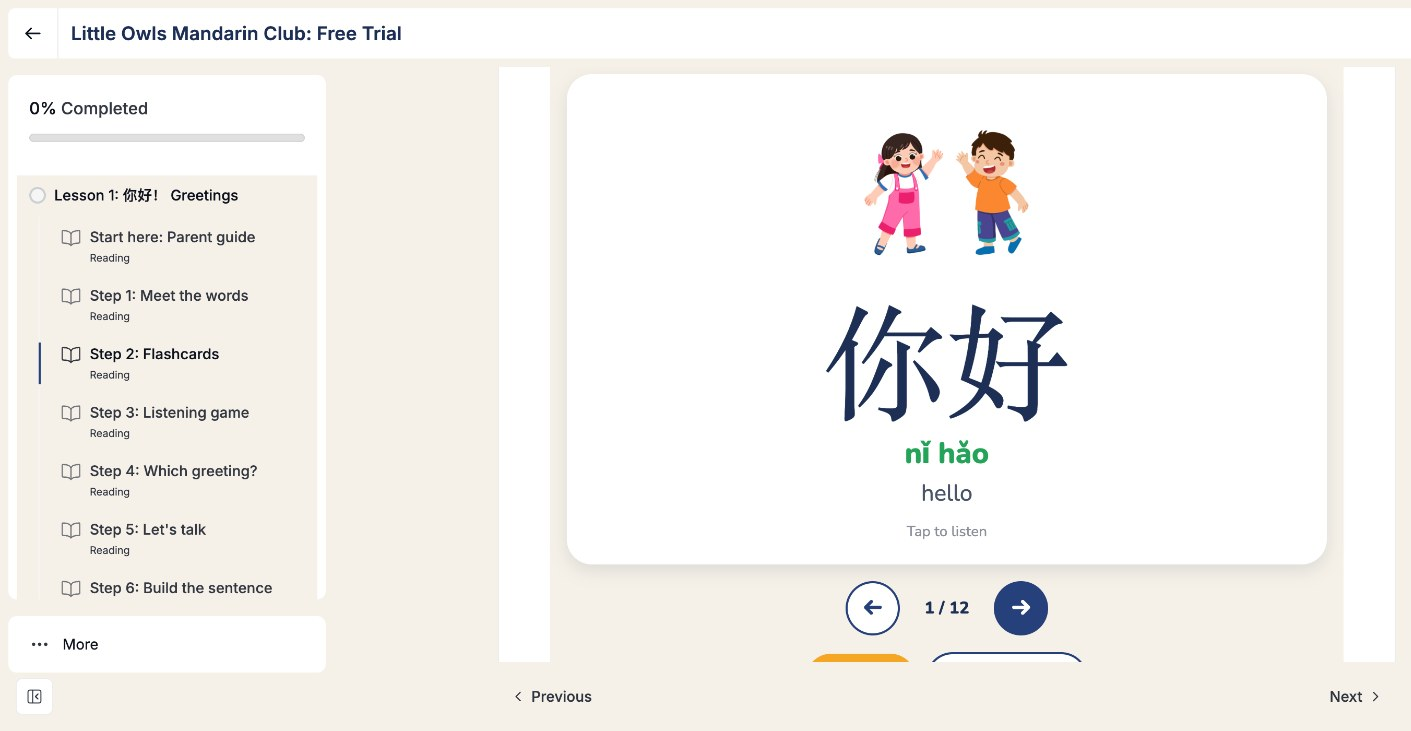
Practice Greetings Before the Family Visits
Lesson 1 of the Little Owls Mandarin Club, our online self-study course for kids, teaches greetings with picture flashcards, speaking practice with Lili, games and a short quiz. A lesson takes 15 to 20 minutes, and your child can try the first one free.
Try Lesson 1 FreePrefer a live teacher? Book a trial classHow to Practice Receiving an Ang Pao at Home
Kids feel shy when a room full of relatives is watching. A few minutes of role-play the week before makes the real moment easy. Take turns being the giver and the receiver with an empty red envelope.
- Greet first. Before any envelope appears, your child greets the elder by name and says 新年快乐 or 恭喜发财.
- Receive with both hands. Practice holding out both hands, palms up, and taking the envelope gently.
- Say thank you. Add 谢谢 with a small nod. Older kids can add a wish such as 身体健康 for a grandparent.
- Keep it closed. The envelope goes into a bag or pocket unopened, which is often the hardest step for little ones.
- Open together later. At home, open the envelopes together and talk about saving part of it. Many parents use this moment for a first lesson about money.
Want a game to go with it? Our Chinese New Year 2027 guide has an ang pao listening game where kids open envelopes by recognizing greetings, plus a tool to find every family member’s zodiac animal.
Ang Pao Beyond Chinese New Year
Chinese New Year is the busiest ang pao season, but red envelopes appear at many happy milestones in Filipino-Chinese families.
- Birthdays, especially a grandparent’s milestone birthday, sometimes with 寿 (shòu, long life) printed on the envelope.
- Weddings, where guests give ang pao to the couple, often in envelopes printed with 囍 (shuāng xǐ, double happiness).
- Graduations, a new baby and housewarmings, as a wish for a good start.
- Christmas and other gatherings, since many Filipino-Chinese families blend both traditions and hand out ampao in December too.
Digital Ang Pao
More families now send ang pao through e-wallets like GCash, which have offered red envelope designs during the New Year season. Digital ang pao help when relatives live abroad or cannot visit, and they solve the hunt for fresh bills. Many grandparents still prefer the paper envelope for children, though, because the moment of greeting and receiving with both hands is the part kids remember.
FAQs About Ang Pao
What Does Ang Pao Mean?
Ang pao is Hokkien for “red packet,” the red envelope of money given for good luck. In Mandarin it is 红包 (hóngbāo).
Who Should Give Ang Pao?
Married adults and elders give ang pao to children and unmarried relatives. Working adults also often give ang pao to their parents and grandparents as thanks.
How Much Should I Put in an Ang Pao?
There is no set amount. Choose what fits your budget and your closeness to the child, prefer even amounts or amounts with 8 such as ₱80 or ₱800, and avoid amounts with 4.
Can I Open an Ang Pao Right Away?
It is polite to wait until the giver has left or until you are home. Opening it in front of them can look like you are checking the amount.
What Should My Child Say When Receiving an Ang Pao?
A greeting such as 恭喜发财 (gōng xǐ fā cái) or 新年快乐 (xīn nián kuài lè), then 谢谢 (xiè xie). Receiving it with both hands completes the polite way to accept it.
Is It Ang Pao or Ampao?
Both are common in the Philippines. Ang pao follows the Hokkien pronunciation, and ampao is how many Filipinos say and spell it. Hong bao is the Mandarin name.
Help Your Child Greet the Family in Mandarin
An ang pao is a small envelope with a big lesson inside: respect for elders, gratitude and a few words of Chinese said with confidence. If your child enjoys practicing these greetings, they can keep going at home with short lessons built for kids, or learn with a teacher in a live class.
Start With Greetings in Lesson 1
Lesson 1 of the Little Owls Mandarin Club, our online self-study course for kids, covers everyday greetings with picture flashcards, speaking practice with Lili, games and a short quiz. It takes 15 to 20 minutes, and the first lesson is free to try.
Try Lesson 1 FreePrefer a live teacher? Book a trial class