The world our children are growing up in runs on connection. The more languages they know, the more people they can talk to, learn from, and dream with. Among all those languages, Mandarin Chinese stands out, complex, beautiful, and spoken by more than a billion people.
It can feel intimidating at first, but that challenge comes with reward. Every word learned opens a new doorway: to friendships across cultures, to stories that sound different when heard in their original language, to opportunities that reach far beyond borders.
China’s influence touches nearly every field, from business and technology to art and education. Helping your child learn Mandarin isn’t about chasing a trend; it’s about giving them a tool to navigate a future that’s already arriving.
If you’ve ever wondered why Mandarin has become one of the most valuable skills a child can learn, stay with us. The reasons might change how you see language, and how you see your child’s potential.
The 9 Reasons at a Glance
- China Is Becoming the New Titan of World Economics
- Mandarin Is the Most Spoken Native Language in the World
- China’s Belt and Road Initiative Is Connecting the World
- Mandarin Sharpens Your Child’s Thinking Skills
- Mandarin Opens the Door to Thousands of Years of Culture
- Mandarin Speakers Are in High Demand
- Mandarin Is an Advantage in Education
- Global Media Is Full of Mandarin
- China Is Leading the Future of Technology
1. China Is Becoming the New Titan of World Economics
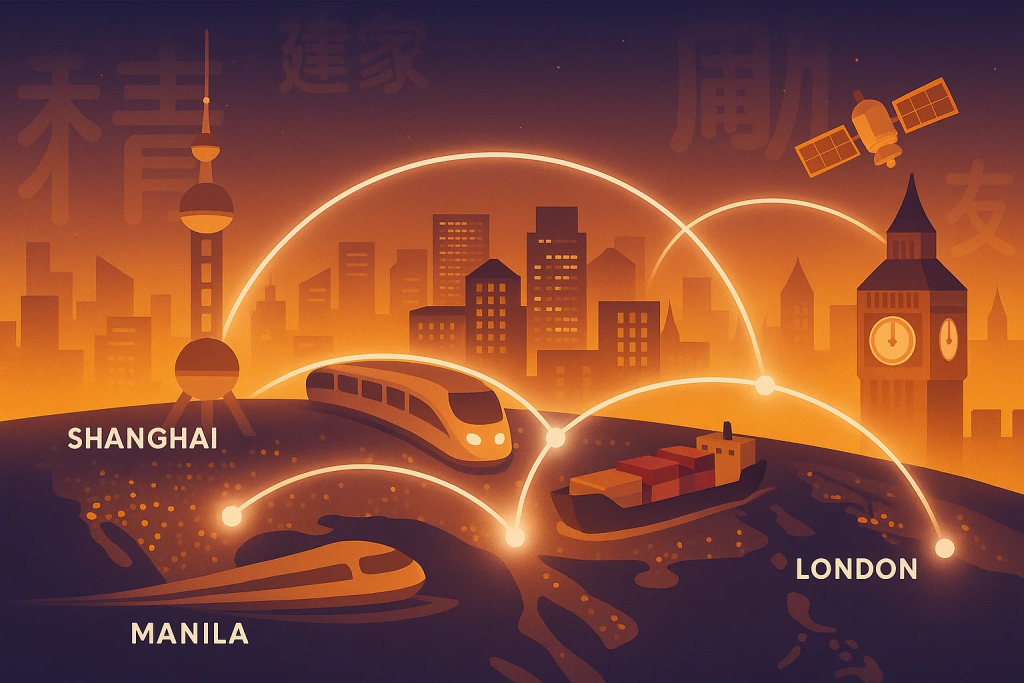
Open any business page and you’ll see the same story told in different ways: China’s economy keeps gaining ground. It has already passed Japan to become the world’s second largest, and its reach now stretches into nearly every major market. The shift hasn’t been sudden, it’s the result of years of consistent growth and smart partnerships that have turned China into a key trading partner for countries across the world.
For families raising children today, this isn’t just another headline. It’s a glimpse of the world those children will enter. As China’s influence shapes everything from technology to education, the ability to speak Mandarin gives young people a way to understand and participate in that change instead of watching it from the sidelines.
2. Mandarin Is the Most Spoken Native Language in the World
In the digital age, finding precise figures can sometimes be a challenging task. However, reputable sources such as Ethnologue and Wikipedia estimate that a staggering 1.2 billion people globally are native Mandarin speakers. That is roughly one in seven people on the planet.
By number of native speakers, Mandarin is the world’s most spoken language. By mastering Mandarin, your child gains access to this global community, opening up opportunities for enriching interactions and diverse cultural experiences. If English is already in their linguistic repertoire, the addition of Mandarin will let your child communicate with a very large share of the world’s population. Imagine the exciting prospects that this broad communication range can bring to your child’s life!
3. China’s Belt and Road Initiative Is Connecting the World
Across continents, a quiet transformation is unfolding. Railways, ports, and digital highways are linking Asia, Europe, Africa, and beyond, part of China’s Belt and Road Initiative, an ambitious effort to connect economies and cultures in ways the world hasn’t seen before.
For children growing up today, that map represents possibility. Mandarin is one of the languages spoken at the center of these collaborations, the language used in meetings, research papers, and conversations that shape how nations work together. A child who understands it can someday follow those stories firsthand, not as an outsider, but as part of the exchange.
The BRI isn’t only about construction or trade. It’s about cooperation, the flow of ideas, skills, and relationships that spark when countries decide to build something together. People who can navigate that space fluently will have a voice in shaping what comes next.
As the world becomes more connected, employers are already looking for those who can bridge cultural and linguistic divides. Mandarin gives young learners a way to step confidently into that future, informed, adaptable, and ready to contribute to conversations that reach far beyond borders.
4. Mandarin Sharpens Your Child’s Thinking Skills
Every language changes the way we think. Mandarin happens to stretch the mind in especially interesting ways.
The writing system alone is a mental workout. Instead of combining letters to form words, children learn symbols that stand for whole ideas. Recognizing those shapes and remembering their meanings trains memory and concentration while building the kind of visual reasoning that helps in art and design.
The spoken side of Mandarin adds a different kind of challenge. Meaning depends on tone, so kids learn to hear small differences in sound and pitch. That habit of listening closely strengthens how the brain notices patterns and details, skills that often show up later in music or math.
When children study Mandarin, they’re not just adding a new language. They’re practicing how to observe, adapt, and think with precision, abilities that stay with them long after class ends.
5. Mandarin Opens the Door to Thousands of Years of Culture

Language is the closest thing we have to time travel. Through Mandarin, children can step into China’s long story that’s filled with poetry, invention, and ideas that still shape the world today.
Imagine a learner reading a line of Li Bai’s poetry and realizing it was written more than a thousand years ago, or discovering how Confucius and Lao Tzu shaped the way people think about kindness and balance. These aren’t distant names in a textbook; they’re voices that come alive through the language itself.
Each character in Mandarin carries meaning. A small piece of art that reflects how people once saw the world. As kids begin to read and understand them, they’re not just decoding words; they’re exploring a culture’s imagination, its humor, and its heart.
In a time when cultures are blending and influencing one another faster than ever, learning Mandarin gives children a rare gift: the ability to experience Chinese traditions from the inside, in their truest form. It’s an invitation to curiosity, one that lasts a lifetime.
Want to see how your child takes to Mandarin? A trial class costs ₱599. It is a live online group class of 45 to 60 minutes, with no obligation to enroll.
6. Mandarin Speakers Are in High Demand
Every year, the world feels a little smaller. Businesses trade ideas across time zones, and conversations in boardrooms, embassies, and classrooms often include a few words of Mandarin. As China continues to grow its role in the global economy, people who can communicate in its language find themselves part of conversations that shape industries and policies.
Diplomats who speak Mandarin build trust faster. They catch the nuances in a sentence that can shift the tone of an entire meeting. In international business, language becomes a bridge, helping teams negotiate, collaborate, and understand what their partners truly mean.
Academics are discovering similar advantages. Research in technology, medicine, and the environment often begins in China, where innovation moves fast. Reading that work in its original language gives scholars direct access to new data, discoveries, and ideas before they reach translation.
Even in fields built on connection, tourism, education, hospitality, Mandarin has become an unexpected advantage. People appreciate when someone makes the effort to speak their language, and that effort opens doors that credentials alone can’t.
7. Mandarin Is an Advantage in Education
Across the world, universities are opening new paths for collaboration with Chinese institutions. Mandarin has become a bridge in this exchange, linking classrooms and research centers that once seemed far apart. Students today can study climate science with researchers in Beijing, join design labs in Shanghai, or collaborate on medical breakthroughs that connect East and West.
These experiences give young scholars something they can’t find in a textbook, perspective. They see how different cultures approach questions, how ideas evolve when shared across borders, and how language can be a tool for innovation.
For many learners, Mandarin is turning education into exploration. It deepens curiosity, stretches imagination, and reminds them that knowledge grows faster when it’s shared across languages and cultures.
8. Global Media Is Full of Mandarin
Open your favorite streaming app and you’ll see it, Mandarin stories are everywhere. From blockbuster hits like “The Wandering Earth” to pop artists such as Jay Chou and Jackson Wang, Chinese media has found a global audience. Popular dramas on platforms like iQIYI and Tencent Video keep millions hooked each week, and social apps such as Bilibili or Weibo are where many of today’s trends begin.
For kids who understand Mandarin, this isn’t just entertainment. It’s a chance to experience another culture directly and to catch the humor, emotion, and storytelling style that can get lost in translation.

China’s digital scene moves quickly, full of ideas that spark new ways of thinking. Learning Mandarin gives children a way to join that global conversation, not just as viewers but as participants in how culture evolves.
9. China Is Leading the Future of Technology
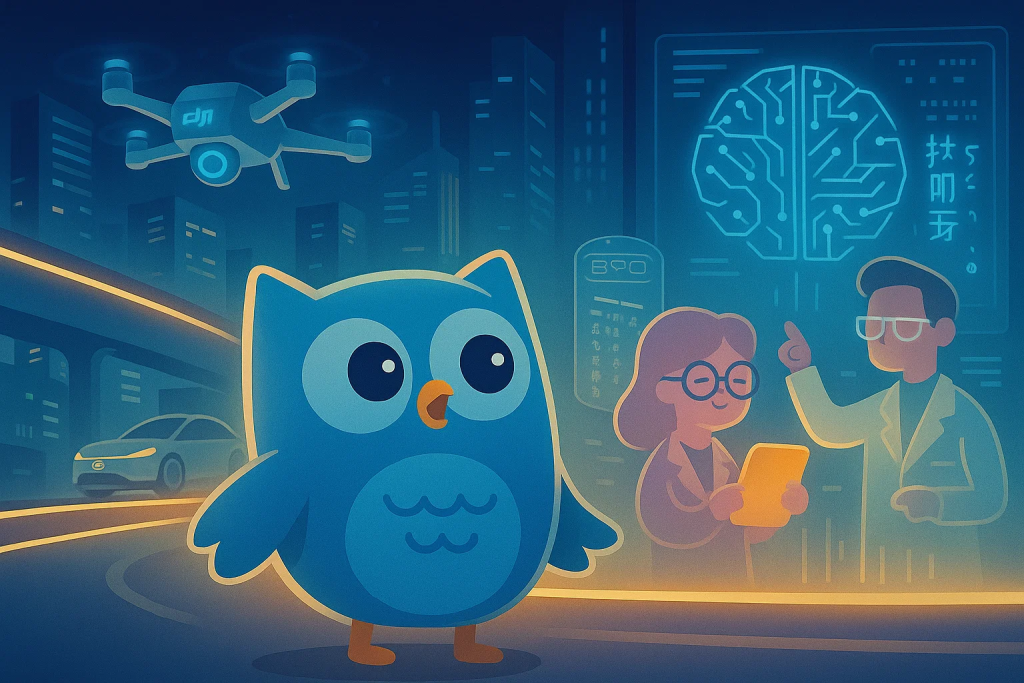
China isn’t just keeping pace with global innovation, in many ways, it’s setting the direction. From BYD’s electric vehicles and CATL’s battery technology, to Huawei’s breakthroughs in 5G and DJI’s dominance in drone engineering, Chinese companies are shaping how the world moves, connects, and creates.
Digital life in China is just as cutting-edge. Apps like WeChat and Alipay have turned smartphones into wallets, classrooms, and offices all at once. Platforms such as Baidu and Alibaba Cloud are pushing advancements in artificial intelligence, while research teams are making strides in quantum computing, green energy, and even space exploration through the Tiangong Space Station and lunar missions.
For kids learning Mandarin, this means they’re not just studying a language, they’re learning the language of innovation. Being able to follow these developments in real time, straight from the inventors and thinkers behind them, helps children understand how the world’s biggest ideas take shape.
It’s also a mindset shift. Kids begin to see technology not as something distant, but as something they can be part of, and perhaps, someday, help create.
Discover the Language of the Future With Little Owls
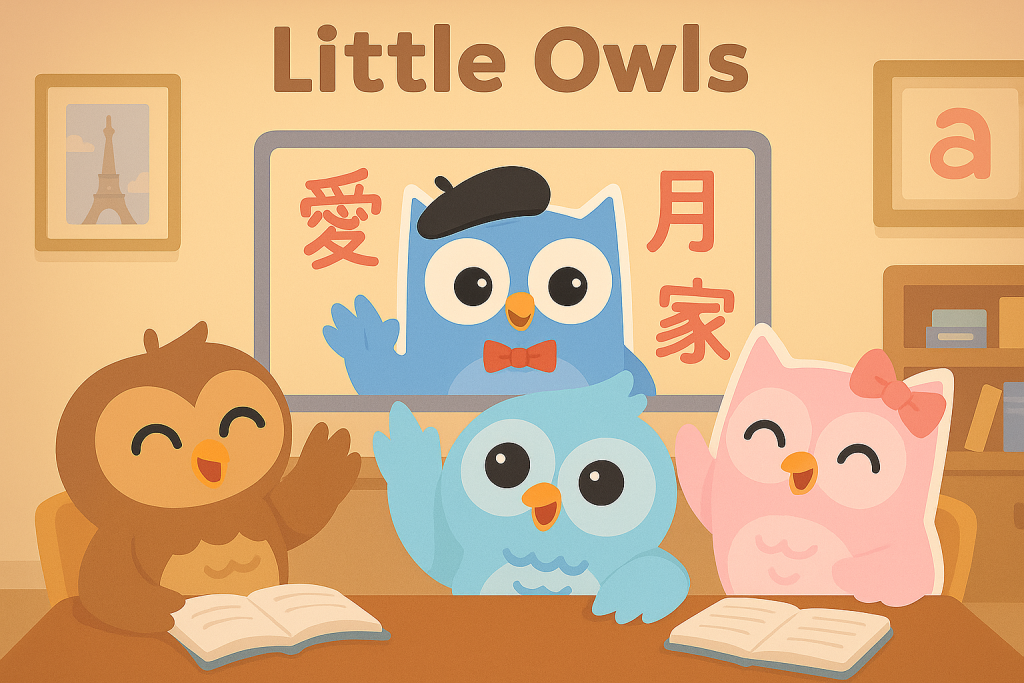
Curious about how fun learning Mandarin can be for your child? Join a Little Owls online trial class and see how children start speaking, listening and thinking in Mandarin through stories, games and real conversations.
Our native and near-native Mandarin-speaking teachers, based in China, create a playful and encouraging space where every child feels confident to explore the language. Classes are live, online, and kept to small groups of up to 4.
Book a Trial Class for ₱599
One live online group class of 45 to 60 minutes, with no obligation to enroll afterward.
Keep reading: Is 4 Too Early? Why Ages 3–5 are the ‘Golden Window’ for Mandarin and Social Intelligence and The 5 Best Second Languages for Kids to Learn in 2026